
Radon Testing in Lubbock, TX
Professional test, free kit, or long-term monitor: straight answers on which one fits your situation, and what real estate deals actually require.
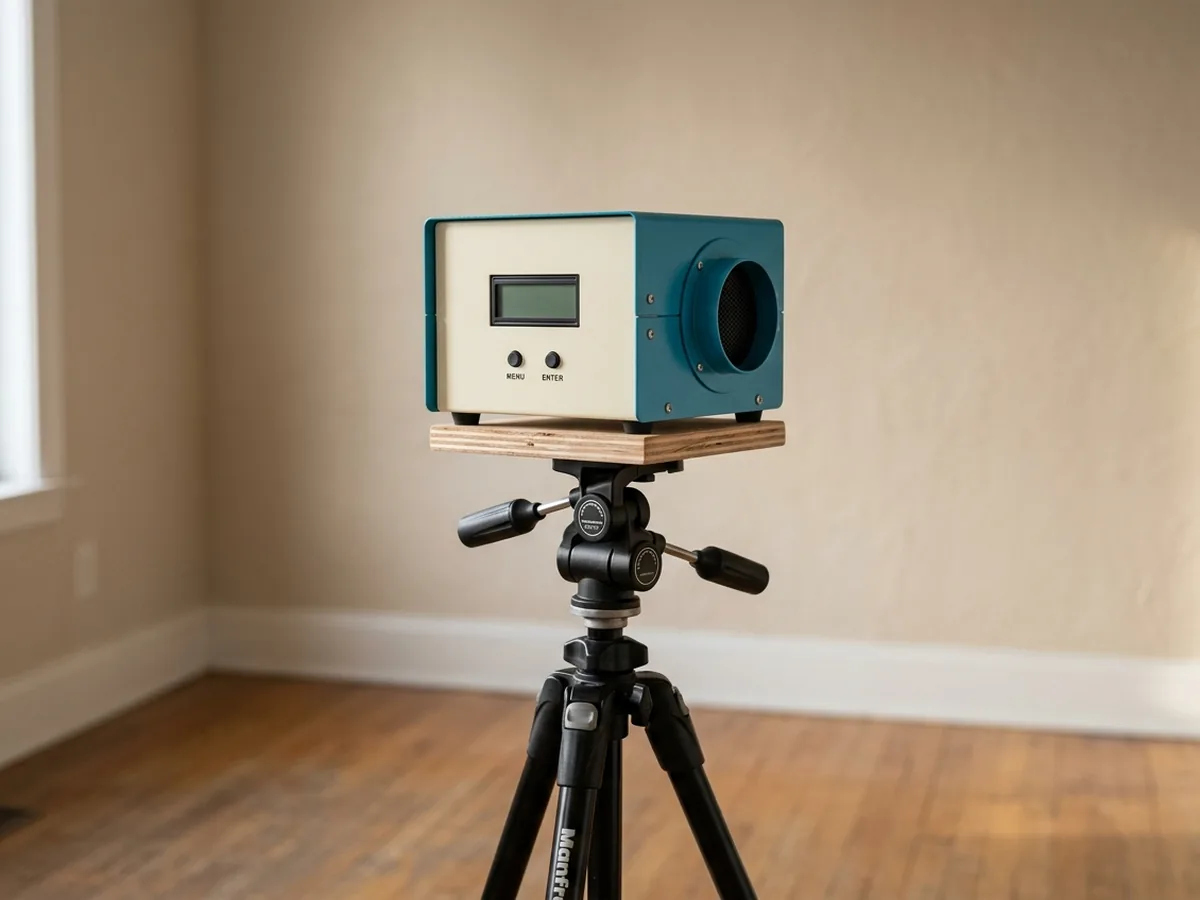
Getting your Lubbock home tested for radon comes down to three real options. A professional can run a certified 48-hour test (listed around $275 locally, per Radon Gas Specialists) and hand you a report with the chain of custody a real estate transaction actually needs. The Texas Radon Program at Texas Tech mails free short-term kits to Texas homeowners, a solid starting point if you're not on a closing deadline. Or a long-term monitor can run for 90-plus days and show what radon actually does across a full West Texas season. Which one fits depends on why you're testing.
Testing here matters. Lubbock County sits in EPA Zone 2 (moderate radon potential on the map), but submitted test results for the area average 12.7 pCi/L, more than three times the EPA's action level. That figure comes from a small, self-selected sample of homes whose owners already suspected a problem, not a citywide average. It's exactly why a proper test is worth taking. Where you place the test matters too: Lubbock's housing stock is a mix of slab, basement, and crawlspace construction with a median build year around 1984, and the EPA recommends testing on the lowest livable level of the home, not an unfinished basement nobody spends time in.
Which radon test is right for your situation?
Real estate deals are the one case where the free kit usually isn't the right call: buyers, sellers, and title companies expect a professional test with a documented chain of custody, not a self-mailed kit. For everyone else, the free TTU kit or a long-term monitor tells you just as much for a lot less. Ready to move on it? Get connected with a local pro or call (806) 329-4585.
| Testing Route | Cost | Turnaround | Best For |
|---|---|---|---|
| Professional 48-hour test | ≈$275 locally | ~48 hrs + lab turnaround | Real estate deals needing a defensible chain of custody; anyone wanting a fast, credible answer |
| Free short-term kit (Texas Radon Program, TTU) | $0 | A few days exposure + mail-in lab turnaround | Curious homeowners not on a transaction deadline |
| Long-term monitor | Varies by device/provider | 90+ days | A true year-round average, especially after a borderline short-term result |
Is radon testing a legitimate concern or just an upsell?
It's a legitimate concern with real data behind it, not an upsell dreamed up by whoever's selling the test. The EPA ranks radon the second-leading cause of lung cancer in the U.S., after smoking, and Lubbock sits on caliche and limestone soils that generate it. Testing costs little and takes days. Skepticism is fair, but it doesn't hold up against how cheap testing actually is.
The skepticism makes sense. Radon is invisible, and it's easy to assume a warning about it is designed to sell you something. But the EPA's ranking isn't marketing copy; it comes from decades of epidemiological research, and testing is one of the cheapest steps in any home inspection. A $275 professional test or a free mailed kit is a low-stakes way to settle the question instead of guessing. Call (806) 329-4585 if you'd rather just ask a person than keep reading.
Is radon testing necessary when buying a home in Lubbock?
Texas doesn't legally require a radon test to close on a home, but most real estate professionals treat it as standard due diligence alongside the general inspection. A test costs a small fraction of the purchase price, and a high result is usually negotiable with the seller. Skipping it just means finding out after closing, when mitigation is your only option.
Lubbock's submitted test results run high enough that some radon data services call it the most active radon market in Texas, though that figure comes from a small, self-selected sample of homes whose owners already suspected a problem, not a citywide average (see the full Lubbock data, with sources). Buyers who skip testing are betting their home isn't one of those. A test taken during your option period gives you real leverage: ask for a credit at closing, or walk, before you own the problem. Get connected with a pro before your option period runs out.
What radon level is really acceptable?
The EPA sets its action level at 4.0 pCi/L: the threshold where U.S. guidance recommends mitigation. The World Health Organization uses a stricter 2.7 pCi/L reference level. Neither number is a safety cutoff; radon risk rises gradually with any exposure, with no truly "safe" floor. 4.0 is simply where U.S. guidance draws the line to act.
The gap between the two numbers trips people up. The EPA's 4.0 pCi/L is a practical action threshold, not a health-based line between "fine" and "dangerous." The WHO's 2.7 pCi/L reflects a more conservative read of the same underlying risk curve. In practice: anything meaningfully above 4.0 pCi/L is worth fixing, and even a result between 2.7 and 4.0 pCi/L is a reasonable one to ask a local radon pro about. Not sure where your number lands? call (806) 329-4585 and ask.
When should I retest?
Retest if your first result sat near the action level, after any foundation or slab work, or roughly every two years as routine upkeep. Radon levels shift with soil, weather, and how tightly a house is sealed. After mitigation, a post-install retest is the only real way to confirm the system is doing its job.
A single 48-hour test is a snapshot, not a guarantee. Levels in the same house can vary with the season, whether windows are open, and even barometric pressure. If your first test came back close to 4.0 pCi/L, a longer follow-up test gives you a more reliable picture before you decide whether to mitigate. If you've already got a system installed, ask about scheduling a retest. See the mitigation page for what a proper post-install check looks like. And if your home has a dirt crawlspace or basement, testing and retesting work a little differently. See our basement and crawlspace guide. If a test comes back high, see what mitigation actually costs in Lubbock before you worry.
Get connected with a Lubbock radon pro
Three fields, no spam, no obligation. Or skip the form: (806) 329-4585.
We pass your info to one local radon professional so they can contact you about your request: nothing else, no lists, no resale.